
Healthcare property insights · OntarioCRE research
What Ontario Medical Property Sales Tell Owners About Pricing.
What the transaction evidence means for comparable sales, clinic improvements and your next selling decision.
What affects the sale price of a medical building or clinic condo? Start with the asset type, relevant local sales, occupancy and the usefulness of the existing improvements. OntarioCRE’s reviewed transaction evidence separates medical condominium units from whole buildings for a reason: a single provincial healthcare-property price is a poor basis for an individual owner’s asking price.
A finished clinic may feel like a highly specialized asset. The next buyer still needs to answer a basic question: does this property work for their use and financial position? Your original construction bill does not answer that question.
Here is how I would use the Ontario Medical & Dental Property Market Report 2026 in a seller conversation—and where I would avoid drawing conclusions from the figures.
First, Compare the Right Kind of Property
The report identified 99 closed-sale events from January 2021 through August 2026. Within those reviewed records, condominium and unit transactions had a median sold price of approximately $515,000; freestanding and whole-building transactions had a median of approximately $1.36 million.
| Reviewed segment | Median sold price | Median reported area |
|---|---|---|
| Medical condominium and unit properties | Approximately $515,000 | 1,104 sq. ft. |
| Freestanding and whole-building properties | Approximately $1.36 million | 3,360 sq. ft. |
Source: OntarioCRE’s 2026 report; closed-sale period January 2021–August 2026. These are descriptive medians for different property groups, not valuation benchmarks for a particular unit or building.
My interpretation: an owner of a clinic condo should not anchor their expectations to a whole-building sale simply because both properties contain healthcare users. Ownership structure, area, land, location, tenancy and condition need to be considered before the comparison is useful.
Do Not Treat the Gap Between Asking and Sold Medians as a Discount
The report’s reviewed current inventory showed median asking prices of approximately $749,000 for condominium and unit properties and $1.95 million for freestanding and whole-building properties.
It would be misleading to compare those asking medians with the historical sold medians and announce how much sellers must reduce their prices. They describe different groups of properties at different points in time. They are not matched asking-to-selling results.
For an individual property, I would look at the relevant competing inventory and comparable closed sales, then investigate differences in location, size, occupancy and condition. The provincial figures provide context; they do not settle the asking price.
Clinical Improvements Need a Credible Replacement User
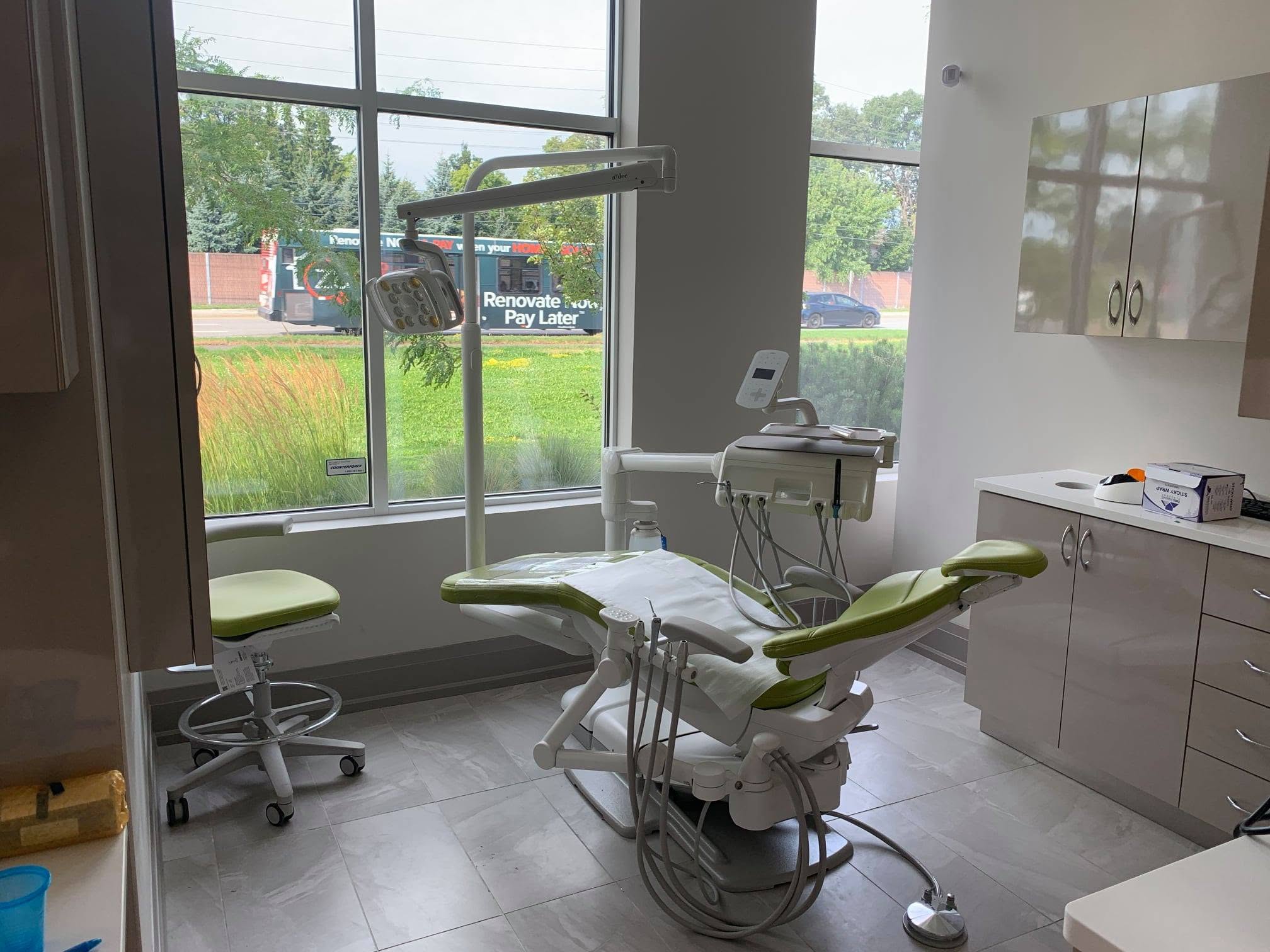
Treatment rooms, operatories, cabinetry and specialized servicing can be useful when they fit the next practice. The same improvements can require alteration or removal for another purchaser.
That is why I would document what exists, establish who owns the equipment and fixtures, and identify what a buyer still needs to verify. I would avoid promising that a purchaser can open immediately simply because the property previously operated as a clinic.
A useful presentation explains the existing room plan, available building information and known restrictions. It distinguishes documented features from assumptions about future use. Our healthcare construction experience illustrates the practical questions behind that review.
Repeated Listings Are a Reason to Investigate
The research reviewed 491 expired and terminated listing records associated with approximately 303 exact property or unit addresses. At least 82 addresses appeared more than once.
Those figures do not mean that 491 separate properties failed to sell. Renewed marketing, changed pricing and alternative property packages can create multiple records for the same address.
For a seller, the useful question is what changed between marketing attempts. Before relisting, examine the property’s price history, presentation, occupancy, information gaps and feedback. Repeating the same proposition deserves a clear reason, not an assumption that another launch will produce a different result.
What I Would Establish Before Recommending a Sale Strategy
- The asset: Condo unit, owner-occupied building or tenanted investment—and the appropriate comparable group.
- The occupancy: Existing leases, possession expectations and whether the likely purchaser wants income or premises for their own practice.
- The improvements: Available plans, servicing information, equipment ownership and what may be reusable.
- The constraints: Known use, parking, access, building or condominium restrictions, and items requiring professional confirmation.
- The owner’s objective: Timing, confidentiality and whether the proposed transaction includes real estate, the operating business or separately defined assets.
The operating practice and the property should not be treated as interchangeable. Equipment, goodwill and business interests need to be clearly distinguished from the real estate being offered.
Considering Selling a Healthcare Property?
Start with the address, approximate size, occupancy and your timing. We can discuss the relevant property segment and the information needed before deciding how to position a sale.
Source and Limitations
This article interprets OntarioCRE’s Medical & Dental Property Market Report 2026. The report’s research review was through September 19, 2026; it is not a live October inventory update. The closed-sale period is January 2021–August 2026.
The underlying professional commercial property records are not a complete land-registry record of every Ontario healthcare transaction. Address matching and available transaction fields have limitations; reported areas and uses require property-specific verification. Read the report’s full methodology before relying on the figures.
The seller considerations above are Gary’s interpretation, not statistical proof that any single feature causes a particular price outcome. A preliminary property discussion is not an appraisal or a substitute for legal, tax, planning, engineering or other professional advice.